DC Circuit Breaker
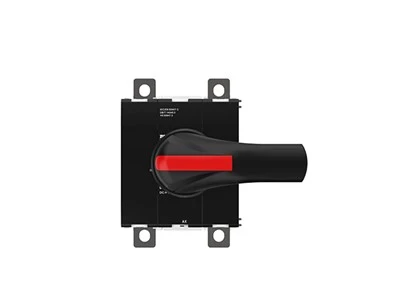
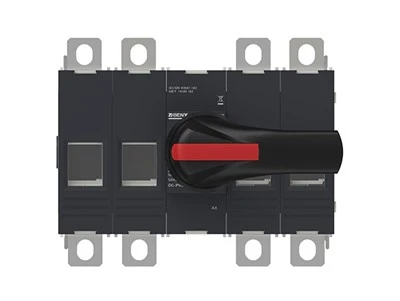
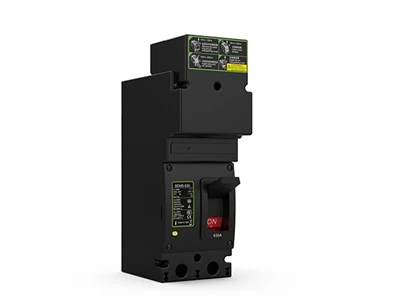
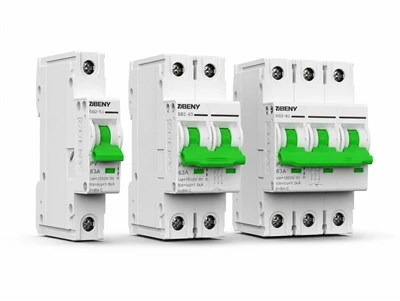
A DC circuit breaker is a switching and protective device specially designed for direct current (DC) circuits, used to automatically cut off the circuit in case of overload, short circuit, or other faults, so as to protect power equipment, lines and personal safety.

Application Scenarios of DC Circuit Breakers
DC circuit breakers are widely used in daily life and industrial production. They are mainly applied in scenarios that require direct current (DC) power supply, undertaking the functions of circuit on/off control and protection against overload and short circuit. Compared with AC circuit breakers, DC circuit breakers can more effectively extinguish the arc generated when the DC circuit is disconnected, which is a key advantage in DC power scenarios.
The main application scenarios are detailed as follows:
1. Photovoltaic Power Generation System
This is the most common application scenario of DC circuit breakers. Household and industrial solar panels generate direct current, and DC circuit breakers are essential components installed on the DC side of the photovoltaic system-specifically between the combiner box and the inverter. Their core role is to safely cut off the DC current in case of equipment failure or maintenance, preventing arc generation and fire hazards, thus protecting the solar panels, DC cables and inverters from damage.
2. New Energy Vehicles and Charging Stations
DC circuit breakers play a critical role in the field of new energy vehicles (NEVs) and supporting charging facilities. The high-voltage battery packs of electric vehicles (usually 300V-800V DC) use DC circuit breakers as the main switch and short-circuit protection device. In addition, DC fast charging piles in charging stations also rely on DC circuit breakers to realize safe power transmission and fault protection between the power grid and the vehicle battery.
3. Energy Storage Systems and UPS
DC circuit breakers are widely used in energy storage and uninterruptible power supply systems. This includes home energy storage batteries, backup power sources for communication base stations, and large-scale UPS (Uninterruptible Power Supply) in data centers. They are responsible for safety control and protection between battery packs and inverters, ensuring stable operation of the power supply system and preventing accidents caused by overload or short circuit.
4. Rail Transit and Industrial Fields
In rail transit systems such as subways and trams, DC circuit breakers are used in auxiliary power supply systems to ensure the safe operation of the entire power system. In industrial production, they are also applied to DC motors, large-scale electrolytic plating equipment and other DC-powered devices in factories, providing reliable protection for industrial equipment and production safety.
5. Daily Electronics and Communication
DC circuit breakers are closely related to daily electronics and communication equipment. For example, 5G base stations and computer rooms use -48V DC power distribution cabinets, which are equipped with DC circuit breakers for branch protection. Inside computers and servers, multiple DC output ports (such as 12V and 5V) also rely on DC circuit breakers to ensure stable power supply. In addition, the 12V/24V DC distribution boards on yachts and RVs are also typical application scenarios of DC circuit breakers.
6. DC Microgrids and Building DC Distribution
With the development of energy-saving and efficient buildings, DC distribution systems have been gradually applied in some high-end buildings, laboratories and other places. These systems are built for DC-powered devices such as LED lighting and DC fans, and DC circuit breakers are used to realize safe distribution and protection of DC power, improving energy utilization efficiency while ensuring safety.

The Difference Between AC Circuit Breakers and DC Circuit Breakers
Although both are called "circuit breakers" and may have similar appearances, AC circuit breakers and DC circuit breakers cannot be mixed, otherwise it may cause serious safety accidents. Below, we will explain the core differences between them from three aspects: principle, structure, and application.
1. Core Difference: Arc Extinguishing Ability
This is the fundamental difference between the two.
Alternating current (AC): The magnitude and direction of the current change 50 times per second (50Hz). This means that every 1/100 second (10 milliseconds), the current will pass through a "zero point". At zero, the arc will naturally extinguish. So the arc extinguishing of AC circuit breakers is relatively easy.
Direct current (DC): The magnitude and direction of the current are constant and there is no zero crossing point. Once an arc is generated, as long as the power supply voltage is sufficient to maintain it, the arc will continue to burn. Therefore, the difficulty of extinguishing DC arcs is much greater than that of AC arcs.
In order to extinguish the DC arc, special measures need to be taken for the DC circuit breaker:
- Longer arc extinguishing chamber, elongating the arc to cool it down.
- Use a magnetic arc extinguishing system (magnetic blowing coil) to quickly pull the arc into the arc extinguishing grid using a magnetic field.
- Usually, multiple contacts are connected in series to divide a long arc into multiple short arcs.
2, Key differences in structure and parameters
|
Feature |
AC circuit breaker |
DC circuit breaker |
|
Polarity identification |
Usually not (positive or negative) |
There must be clear polarity (+/- identification). Wiring errors can seriously reduce arc extinguishing capability and even lead to fires. |
|
rated voltage |
Rated as AC 230V/400V, etc |
Marked as DC 12V/24V/48V/110V/250V/500V, etc. Attention: The breaking capacity of the same DC circuit breaker varies at different voltages. |
|
rated current |
Overload thermal trip characteristics based on effective value of AC current |
The thermal trip characteristics are similar to those of AC, but the setting value of magnetic trip (short circuit protection) may be different. |
|
Extreme usage |
1P,2P,3P,4P |
In a DC system, the voltage that can be cut off at each pole is relatively low. For example, a 1P DC circuit breaker may only be able to safely disconnect DC 250V, while an AC 1P can disconnect AC 230V. To cut off DC 500V, it may be necessary to connect two 1P poles in series. |
3. Why is it Absolutely Not Interchangeable?
Replace DC circuit breakers with AC circuit breakers:
Risk: In the event of a DC short circuit, the arc cannot be extinguished. Circuit breakers can burn, explode, and continuously emit arcs, igniting surrounding combustibles. This is strictly prohibited.
Replace AC circuit breakers with DC circuit breakers:
Risk: Although it may not immediately explode, DC circuit breakers are designed for constant arc and may not provide accurate protection in AC circuits due to the complex structure of the arc extinguishing chamber, resulting in high overvoltage or mismatched tripping characteristics. And the cost is higher, completely unnecessary.
4. How to Quickly Distinguish?
Checking the nameplate parameters: the most reliable method. AC (~) or DC (⎓) will be clearly marked above.
Check the terminal identification: There are usually clear "+" and "-" polarity markings next to the DC circuit breaker terminals. There is no communication circuit breaker.
Look at the arc extinguishing chamber: The arc extinguishing chamber of a DC circuit breaker is usually longer and more complex, with more and denser visible metal grids inside.
5. Suggestions for Applications in Daily Life
- Photovoltaic, electric vehicles, and battery energy storage: Special DC circuit breakers must be used and strictly wired according to the polarity indicated.
- Ordinary household 220V lighting socket: Use standard AC circuit breakers (commonly such as C-type trip curves).
- Low voltage DC small devices, such as 12V fish tank water pumps or LED light strips, can be replaced with small DC fuses or switches if the current is very low. However, do not use ordinary AC wall switches to control DC, otherwise internal arcing will quickly damage the switch.
Summary: AC circuit breakers cannot be used for DC circuits, and using DC circuit breakers for AC circuits is also unsafe and wasteful. When purchasing and installing, be sure to confirm the AC/DC logo on the nameplate.

DC Circuit Breakers in Photovoltaic Systems
DC circuit breakers in photovoltaic systems serve as the core "safety guards" ensuring the safe operation of the entire power station. Since PV modules generate direct current and system voltages are constantly rising (often reaching 600V–1500V), they present unique challenges for circuit switching and protection.
Below are four key considerations for selecting and installing DC circuit breakers in photovoltaic systems:
1. Core Challenge: DC Arc Extinguishing
This is the fundamental difference between PV DC circuit breakers and ordinary AC circuit breakers.
Unlike alternating current, direct current has no zero-crossing point. Once an arc forms during circuit breaking, it continues to burn and cannot easily extinguish on its own. Failure to effectively extinguish the arc may burn contacts or, in severe cases, cause a fire.
Solution: PV-specific DC circuit breakers are equipped with a high-performance arc extinguishing chamber and magnetic blowout system. Using magnetic force, the arc is rapidly elongated and pushed into a dense metal grid, where it is cooled, split, and quickly extinguished.
Safety Warning: Ordinary AC circuit breakers are strictly prohibited as substitutes. They cannot effectively extinguish DC arcs and pose extreme safety hazards.
2. Core Parameters: Voltage and Current Matching
Correct selection directly determines the effectiveness of protection.
Rated Voltage: The breaker's rated voltage must be greater than or equal to the maximum possible voltage of the PV system. This maximum voltage is not the operating voltage, but accounts for the increased open-circuit voltage of PV modules at low temperatures. Common residential systems use 600V–1000V, while large-scale power plants can reach 1500V.
Rated Current: The 125% rule is typically applied: the breaker's rated current ≥ maximum operating current of the circuit × 1.25.For example, if a circuit's maximum operating current is 50A, a 63A breaker should be selected to avoid nuisance tripping caused by heat buildup during normal operation.
3. Key Detail: Polarity and Wiring
This is the most error-prone yet critical step in installation.
Polarity Marking: Most PV DC circuit breakers are polarity-sensitive, with clear "+" and "–" markings on terminals.
Wiring Rule: Wiring must strictly follow the markings (connect the positive supply to "+" and negative to "–"). Reversed wiring may not affect overload protection, but during a short circuit, the internal arc-extinguishing magnetic field will be misdirected. The arc cannot be properly drawn into the arc chamber, which may burn the switch or even cause an explosion.
Series Connection for Higher Voltage: To safely break higher-voltage DC circuits, multi-pole breakers are often connected in series. For instance, a 2-pole breaker (each pole interrupting 250V) can be used in series for a 500V system.
4. Authoritative Standards: Quality and Certification
Choosing legitimate products is the final guarantee of safety.
National Standard: China has specially formulated GB/T 34581-2017 "General Technical Requirements for DC Circuit Breakers for Photovoltaic Systems" for photovoltaic applications, which sets strict performance and testing requirements for such products.
Key Certification: When purchasing, verify whether the product is clearly marked with the "DC" logo and whether it complies with authoritative international or industry certifications such as TÜV, UL489B, or IEC 60947-2. These certifications ensure the product meets strict safety and performance standards.
🔧 Application Example: Where to Install the Circuit Breaker?
A typical photovoltaic system requires DC circuit breakers to be installed at the following three key locations, each serving a specific protective role:
- Photovoltaic Module → Controller (MPPT): Installed in front of the combiner box or controller, it prevents current backflow that could damage the PV modules. This installation avoids reverse current from the system damaging the modules, especially during shutdown or fault conditions.
- Controller (MPPT) → Battery: Protects the charging circuit from overload or short circuit. It ensures the battery is not overcharged and prevents damage to the controller and battery caused by abnormal current.
- Battery → Inverter: Installed as close as possible to the positive output terminal of the battery, this is the most important protection point in the entire system. It can handle the high current generated by inverter faults, preventing fire or equipment damage caused by short circuits in the inverter.
Conclusion:
DC circuit breakers are an indispensable component of photovoltaic systems. Without their protection, PV panels are more susceptible to damage, and the entire system is prone to faults. DC circuit breakers and AC circuit breakers have distinct roles and applications in daily life and industrial production, and neither can be replaced by the other-both are crucial for the normal operation of related equipment. By following proper wiring techniques, safety measures, maintenance procedures, DC circuit breakers can provide reliable protection for various photovoltaic systems, ensuring their safe and stable operation.