ZJBENY is a trusted manufacturer of protective components for photovoltaic systems across the globe. Through our focus on solar DC protection design, production, and marketing, we can bring brand-building PV protection solutions.
In recent years, ZJBENY has attentively invested resources in research on EV-related products, successively manufacturing other types of products, thus reaping wide market popularity across the world.
-
![Quad-In Microinverter BYM1000]() Quad-In Microinverter BYM1000With the rated output power of 1000W, the BENY BYM1000 microinverter connect to 4 panels and enable module-level maintenance and management by monitoring power generation of each module. Module-level data can be uploaded to the...view more
Quad-In Microinverter BYM1000With the rated output power of 1000W, the BENY BYM1000 microinverter connect to 4 panels and enable module-level maintenance and management by monitoring power generation of each module. Module-level data can be uploaded to the...view more -
![Quad-In Microinverter BYM2400]() Quad-In Microinverter BYM2400With the rated output power of 2400W, the BENY BYM2400 microinverter connect to 4 panels and enable module-level maintenance and management by monitoring power generation of each module. Module-level data can be uploaded to the...view more
Quad-In Microinverter BYM2400With the rated output power of 2400W, the BENY BYM2400 microinverter connect to 4 panels and enable module-level maintenance and management by monitoring power generation of each module. Module-level data can be uploaded to the...view more -
![Single-In Microinverter BYM600]() Single-In Microinverter BYM600BENY BYM500/BYM550/BYM600 microinverter connect to 1 panel and enable module-level maintenance and management of the PV station by monitoring power generation of each module.view more
Single-In Microinverter BYM600BENY BYM500/BYM550/BYM600 microinverter connect to 1 panel and enable module-level maintenance and management of the PV station by monitoring power generation of each module.view more -
![Dual-In Microinverter 800]() Dual-In Microinverter 800BENY BYM800 microinverter connect to 1 or 2 panel and enable module-level maintenance and management of the PV station by monitoring power generation of each module.view more
Dual-In Microinverter 800BENY BYM800 microinverter connect to 1 or 2 panel and enable module-level maintenance and management of the PV station by monitoring power generation of each module.view more -
![Single-In Microinverter BYM550]() Single-In Microinverter BYM550BENY BYM500/BYM550/BYM600 microinverter connect to 1 panel and enable module-level maintenance and management of the PV station by monitoring power generation of each module.view more
Single-In Microinverter BYM550BENY BYM500/BYM550/BYM600 microinverter connect to 1 panel and enable module-level maintenance and management of the PV station by monitoring power generation of each module.view more -
![Quad-In Microinverter BYM2800]() Quad-In Microinverter BYM2800With the maximum output power of 2680 W, BENY BYM2400 microinverter connect to 4 panels and enable module-level maintenance and management of the PV station by monitoring power generation of each module. Module-level data can be...view more
Quad-In Microinverter BYM2800With the maximum output power of 2680 W, BENY BYM2400 microinverter connect to 4 panels and enable module-level maintenance and management of the PV station by monitoring power generation of each module. Module-level data can be...view more -
![Single-In Microinverter BYM500]() Single-In Microinverter BYM500BENY BYM500/BYM550/BYM600 microinverter connect to 1 panel and enable module-level maintenance and management of the PV station by monitoring power generation of each module.view more
Single-In Microinverter BYM500BENY BYM500/BYM550/BYM600 microinverter connect to 1 panel and enable module-level maintenance and management of the PV station by monitoring power generation of each module.view more


Why Choose Us?
Rich Experience
Our experience of working in the electrical industry for more than 30 years allows us to create solar DC components that comply with the latest DC standards. With the inheritance of 30+ years of experience in the research and production of DC protection products, we are continuously dedicated to the EV charging field.
Broad Market
ZJBENY has attentively invested resources in research on EV-related products, successively manufacturing other types of products, thus reaping wide market popularity across the world.
Wide Product Range
ZJBENY offers a full range of solar PV protection products and EV chargers for different solar PV, battery energy storage, and EV charging system. Our Main Product Lines: EV Charger, Rapid Shutdown Device, Microinverter, PV Combiner Box, DC Isolator Switch, DC Circuit Breaker, DC Fuse Holder, DC Contactor, AC Components, etc.
Leading Service
We independently complete the R&D, production, marketing, sales, and technical support processes. We satisfy your needs with our long warranty, technical support, and other value-added services.
What is Microinverter?
A micro-inverter is device that connects to a single solar panel, converting DC (direct current) from the panel into AC (alternating current), which can power household appliances or be sent into the grid for energy credits. Unlike string inverters, micro-inverters control the output of a single panel.
Advantages of Microinverter
Power Optimization
With micro-inverters, each panel is isolated from the rest of the array. One shaded panel may drop to 300W, but the rest of the panels remain unaffected and continue to produce at its 350W capacity.
The net result is that micro-inverters allow you to produce more power out of the same panels. In areas where trees or other obstructions will cast shade on your panels, micro-inverters are well worth the investment.
Isolated Equipment Failure
Let's say a panel malfunctions due to faulty wiring and stops producing power. With micro-inverters, that panel is isolated, so the rest of the array keeps producing power. The other panels will continue to work, so you are not stuck without a working system while you file a warranty claim and get it replaced.
Ease of Installation
Micro-inverters use standard AC wiring, similar to what is used throughout your house. They are also plug-and-play, with each unit plugging into the next.
As a result, micro-inverters are extremely easy to install and connect because they use standard AC wiring and it only takes a few seconds to plug in each unit.
Expandable Design
Due to their 1-to-1 nature, systems with micro-inverters can essentially be as small or as large as you want them. If you want, you can start with a single panel+micro-inverter pairing. Adding more panels later isn't a problem, because none of the existing equipment needs to be moved or re-wired to facilitate the addition.
Disadvantages of microinverter systems
Microinverters Cost More than Other Inverters
Microinverters are relatively expensive. They need to be affixed to the back of every single solar panel. They typically cost $1,000 or more than a string inverter on a standard 5kW residential solar installation.
Panel-Level Performance Monitoring May Not be Available Without an Upgrade
Although microinverter manufacturers sell the ability to monitor each panel, they do not always include the actual monitoring that allows you to have the same performance visibility your installer does, unless you buy an upgrade.
Less Suitable for Battery Backup Systems
If you're looking to add battery storage to your solar system, microinverters are not the best choice. For maximum power output, it'd make more sense to couple your panels to your battery before converting the electricity to AC and then back to DC again.
Microinverters VS. Other Inverter Options
String Inverters Vs. Microinverters
The most significant difference between string and microinverters is that when using a string inverter to wire your panels, depending on the size of your solar system, you only need to use one or two string inverters (usually referred to as "strings"). This makes troubleshooting more manageable if your system fails, as all 6-12 panels of the inverter supports are wired to just one destination. Given the minimal wiring requirements, string inverters are also cheaper to install and maintain than microinverters. That being said, the simplified wiring scheme can also make it more expensive to expand your solar system in the future. It also means that underperforming solar panels will affect the whole circuit rather than just its own output.


Not Just Traditional Cyber & Immigration Firm
Unlike micro and string inverters, power optimizers don't immediately convert direct currents to alternate currents. Instead, they "condition" it and send it to a centralized inverter. These module-level power electronics, or MLPEs, are very similar to microinverters because they can monitor individual solar panel performance and allow for flexibility in building a solar system on a marginally shaded roof.
Types of Microinverter
Direct Current Microinverters
These inverters convert direct current from a solar module's battery into alternating current, or DC energy. These are often called DC to AC solar modules. These are most commonly used for applications where the sun does not shine as much.
Microinverters Convert
These inverters are used with solar panel systems. These inverters do not allow you to store a large amount of energy, but they work very well if you don't have a lot of sun. These inverters are the most expensive, but they are also some of the most effective.
Direct Conversion Inverters
These use an inverter and are the most expensive type of Microinverter. These inverters work by changing one or two different currents from the battery to DC current, which is the standard for solar inverters. The drawback to these is that they take longer to charge and discharging them will lead to power drop-outs. However, they can be more effective if you are planning on storing enough energy to run all your appliances at night.
Three Phase Microinverters
The main drawback to these is that they do not allow for any storage capacity and work best with direct current power. They are best suited to small solar panel systems. They have the fastest charge times available and can be the most cost effective. Unfortunately, they can not be used with grid-tie applications.
Full-Phase Microinverters
They use a inverter and a battery in a closed loop to increase the battery's charging capability. This allows the same amount of power to be obtained from the battery as was produced by the inverter. Although this allows the maximum performance from the battery, it also has the highest power output and thus is often the preferred choice for powering many small home systems. These microinverters can also be used to run a portion of a home grid during a partial power outage.
Shading Microinverters
These are designed to be installed on a small roof or mount down over a fascia or skylight. They attach quickly and easily to the roof and are capable of being run in either bi or tri-axle configurations. Binskered and silky shading microinverters are sometimes referred to as solar blankets and work best in sunny climates where direct sunlight is accessible. They work best in conjunction with a photovoltaic roofing system.
Certifications
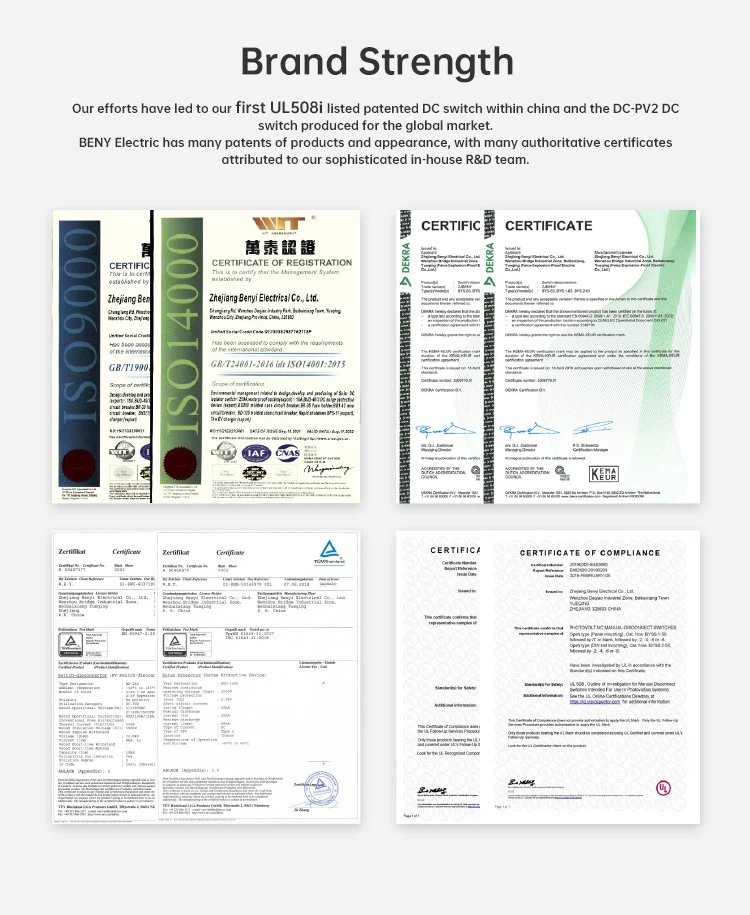
We have the UL1741 mark, certification issued by Underwriters Laboratories, the most important for system interconnection tests in the USA. ZJBENY also holds SAA, CB, CE, TUV, ISO, RoHS certifications.
Contact US
If you have any enquiry about quotation or cooperation, please feel free to email us at benyi@zjbeny.com, or use the following enquiry form. Our sales representative will contact you within 24 hours. Thank you for your interest in our products.
TEL: +86-577-57177008
FAX: +86-577-57177007
Address: Changjiang Rd, Wenzhou Daqiao Industry Park, Yueqing, Wenzhou, Zhejiang, China, 325603
Frequently Asked Questions
Q: What does a microinverter do?
Q: Is microinverter better than inverter?
Q: What is the downside of Microinverters?
Q: Are micro inverters any good?
Q: What is disadvantage of a micro inverter?
Q: How long do microinverters last?
Q: Are solar panels with microinverters better?
Q: Do microinverters overheat?
Q: Do Microinverters work with a battery?
Q: Why are ZJEBNY microinverters the best?
Q: Are micro inverters good for off grid?
Q: What size micro inverter do I need?
Q: Which is better micro inverter or power optimizer?
Q: Are micro inverters noisy?
Q: How many solar panels can a micro inverter handle?
Q: Do micro-inverters have to be grid tied?
Q: What is the difference between solar optimizer and microinverter?
Q: Can you mix micro-inverters?
Q: How many micro inverters can you string together?
Q: How many micro inverters can be connected together?
Our company is one of the leading microinverter manufacturers and suppliers in China, providing the best customized service. Welcome to wholesale high quality microinverter for sale here and get quotation from our factory.